Commercial cleaning and food safety professionals in Brampton support food establishments, commissaries, bakeries, warehouses, and mobile food services staying compliant. They sanitize high-contact points, food preparation surfaces, equipment, floors, drains, restrooms, and food handling spaces with approved chemicals, maintaining proper ratios, and documenting contact times. You need scheduled cleaning determined by hazard level, volume, food allergies, and inspections, along with documented proof that support Hazard Analysis Critical Control Points, audits, and regulatory adherence. The sections below explains how effective cleaning systems must contain.
Main Points
- Sanitation professionals from Brampton assist restaurants, grocery departments, commissaries, warehouses, bakeries, schools, mobile vendors, and allergen-sensitive operations.
- Compartmentalized approaches treat high-touch surfaces, food-contact equipment, kitchens, floors, drains, restrooms, and storage areas for eliminating cross-contamination.
- Approved contractors validate approved sanitizer dilution, suitability, and contact time, then document conclusion with samples, assessments, and corrective-action records.
- Proper cleaning plans factor in threat, throughput, format changes, incidents, and standards when distributing daily, periodic, and annual operations by area.
- Opt for suppliers with HACCP, sanitation, expertise, WHMIS, education, insurance, credentials, coded equipment, and inspection-ready sanitation files.
Which Brampton Operations Need Food Safety Cleaning?
Any Brampton facility that processes, stores, prepares, packages, or distributes food needs food safety cleaning. You must implement it if your facility falls under public health review, food rules, or HACCP systems. That requirement covers eateries, dining facilities, food distribution centers, supermarket departments, meat markets, fish counters, corner stores, and commercial kitchens.
You also need proper hygiene cleaning in distribution centers, food processing plants, freezer facilities, commercial bakeries, educational nutrition programs, event spaces, and catering hubs. Mobile and seasonal operations count too, including catering vehicles, market vendors, and seasonal stalls. If your staff process ingredients, portion ready-to-eat items, reheat products, or store allergens, your facility needs written cleaning standards. In Brampton, sanitation isn't optional; it's part of regulatory, business, and safety compliance.
What Do Brampton Cleaning Experts Clean?
Your facility requires professional cleaners who disinfect frequently contacted surfaces, kitchens, floors, and restrooms to maintain food safety compliance and public health standards. These specific areas are emphasized because they represent the most significant contamination risk, hazardous walking conditions, and breaches of sanitation codes.
Knowing their service areas allows you to confirm your operation's sanitation satisfies operational demands and regulatory compliance.
Prioritizing High-Touch Surface Sanitizing
Professional cleaning in Brampton teams highlight high-touch surface sterilization given the potential of bacteria, viruses, and food residue transmitting across your space. You must have a formal plan for sterilizing frequently touched items like handles, plates, switches, railings, equipment controls, payment terminals, and fridge pulls. Implementing touchpoint mapping, teams identify every high-traffic zone and determine cleaning timing
verify successful disinfection
Food Prep Areas, Flooring, and Sanitary Facilities
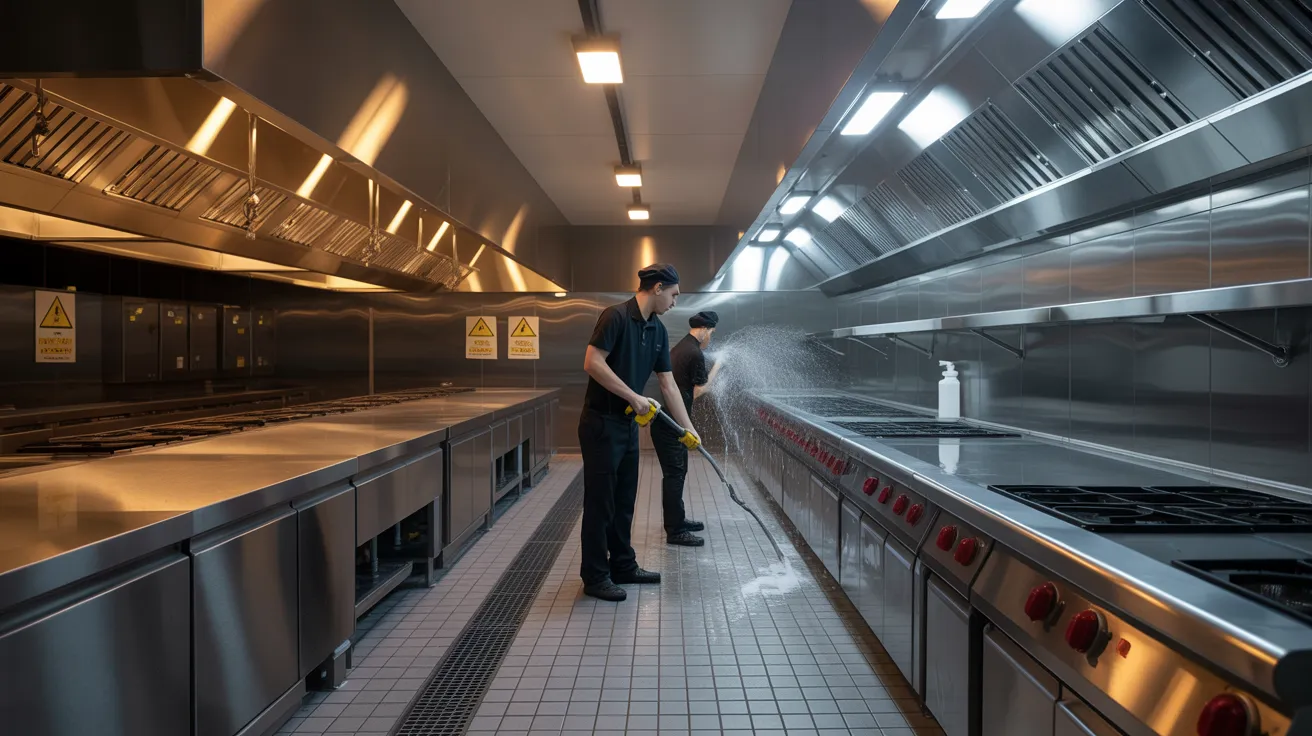
Brampton cleaning services zero in on kitchens, floors, and restrooms as each zone presents distinct food safety, slip-and-fall, and public health risks. In industrial kitchens, you need grease removal from cooking stations, appliance surfaces, drain systems, preparation areas, and backsplashes to reduce contamination and pest pressure.
You should also expect documented flooring maintenance. is also provided as part of the service.
Restroom sanitation requires disinfecting touch areas, bathroom equipment, stall barriers, supply stations, and bins, restocking supplies and controlling odours. They also service restaurant moprooms, where chemical storage, sink hygiene, and drainage conditions can affect sanitation compliance and staff safety daily.
The Importance of Food Safety Cleaning in Brampton
In Brampton, you must copyright food-safe cleaning standards to satisfy regulatory standards and achieve compliance. You also minimize bacterial spread through proper cleaning of food-preparation surfaces, appliances, and frequently-touched items. Most importantly, you help protect public health by lowering the risk of foodborne illness in your facility.
Regulatory Code Requirements
Because Brampton food establishments operate under stringent health requirements, food safety cleaning directly influences your competence to adhere to health code requirements, defend customers, and eliminate enforcement action. You must maintain sanitized food contact points, recorded sanitation plans, safe chemical management, and verifiable staff procedures that meet municipal and provincial inspection expectations.
Extensive hygiene logs permit you to learn about this prove due diligence during inspection audits and establish your operations remain reliable, replicable, and overseen. Proper hygiene practices also promotes allergen management by limiting contaminants on common tools and commonly contacted zones.
Contamination Management
Following regulatory requirements depends on your ability to prevent cross-contamination in routine food work and sanitation. You must separate raw ingredients from ready-to-eat foods, sanitize prep surfaces between tasks, and store chemicals away from food-contact items. Clear procedures reduce transfer risks and promote steady regulatory adherence.
You should implement allergen segregation to prevent major allergens from touching shared surfaces, containers, or equipment. Employ separate boards, labeled implements, and careful equipment identification so staff don't mix items throughout cooking or serving. Mandate washing hands following uncooked proteins, shellfish, egg items, or allergen products. Change cleaning rags frequently, and check disinfectant potency using test kits. When staff members receive training on these procedures each work period, you create a cleaner, safer operation that meets Brampton's food safety expectations daily.
Public Health Safeguarding
If proper sanitation declines, you don't merely face potential inspection issues—you amplify the risk of pathogenic contamination harming customers, staff, and the broader Brampton region. You also undermine your responsibility in protecting public health, especially in busy food facilities where pathogens travel quickly through surfaces, equipment, and touchpoints.
You depend on sanitation protocols that remove soils, effectively sanitize, and verify results. This entails adhering to contact periods, utilizing authorized sanitizers, recording schedules, and training employees to meet compliance standards. These actions support disease prevention by reducing microbes before contaminating food or hands. In Brampton, robust sanitation shields vulnerable populations, curtails outbreak likelihood, and demonstrates accountability. When you adhere to proper protocols, you go beyond regulations—you meaningfully lower danger and advance safer food handling across the region.
How Does Cleaning Support Food Safety Compliance?
Maintaining comprehensive cleaning schedules ensures food safety compliance by reducing contamination risks, managing pathogen expansion, and keeping your facility compliant with sanitation requirements under HACCP-based programs and public health regulations. You confirm that food-handling surfaces appear visibly clean and microbiologically controlled, facilitating documented preventive controls and inspection readiness.
Diligent cleaning moreover solidifies allergen management by eliminating residues that can cause undeclared allergen exposure. When you match validated sanitation procedures with regulatory training, your staff can execute consistent approaches, use approved chemicals accurately, fill out documentation properly, and address variations ahead of problems worsen. Systematic cleaning promotes traceability, validates remedial measures, and proves accountability when audited. Moreover, it supports you safeguard quality assurance, maintain operational compliance, and lower the risk of punitive measures, mass recalls, complaints, and unnecessary safety threats.
Establishing When to Plan Commercial Cleaning
Plans for cleaning work most effectively when established based on risk, production volume, and regulatory requirements instead of just a fixed calendar.
facility shutdowns, seasonal soil accumulation, or times of high pest activity. If your facility hosts promotions, catering, or public functions, plan cleaning immediately prior to and following for effective event transition
Selecting the Right Brampton Cleaning Experts: Key Considerations
Begin by evaluating providers based on sanitation compliance standards—not solely on budget. You should confirm that each organization comprehends CFIA, public health, and HACCP-aligned expectations applicable to your facility. Request insurance certificates, WHMIS compliance, staff training documentation, and oversight procedures. Assess whether technicians recognize cross-contamination hazards, chemical handling protocols, and verifiable sanitation records.
You must also evaluate operational reliability and oversight. Seek references from Brampton food companies, then assess response speed, corrective-action procedures, and communication quality. Ensure the company supports supplier audits and can provide inspection-ready documentation when authorities or third parties demand verification. Verify equipment is maintained, color-coded items are deployed correctly, and site-specific hazards are understood. A reputable service safeguards compliance, product integrity, and your brand reputation.
Which components are part of a hygiene cleaning program?
Establish a documented plan that establishes every sanitation task, standard, and responsibility ahead of production commencement. You should specify cleaning frequencies, approved chemicals, dilution rates, contact times, tools, and verification methods for each zone, surface, and piece of equipment. Make sure to include pre-operational inspections, corrective actions, and employee training requirements.
Your strategy should also address prevention of contamination, waste management, pest-control tactics, and scheduled records for restrooms, drains, floors, and food-contact areas. Outline how you'll separate raw and ready-to-eat processes, facilitate ingredient tracking, and maintain accurate allergen labeling through validated cleaning between product changes. You should establish accountability, document signed records, and assess results against regulatory standards, HACCP controls, and customer requirements. When gaps appear, update procedures immediately and retrain staff.
Popular Asked Questions
Do cleaning services work during nighttime hours at Brampton facilities?
If you operate regulated spaces, you'll also need documentation that support inspections and maintain compliance.
Do Brampton cleaning experts offer emergency spill response services?
Yes, you can discover many Brampton cleaning professionals providing hazard containment options. They handle hazardous incidents, evaluate risks, contain affected zones, and begin swift decontamination to minimize exposure and avoid operational impact. You should confirm timeframes, certifications, safety protocols, and waste procedures. If your facility must meet compliance standards, pick a provider that documents events, adheres to standards, and ensures audit compliance.
Do environmentally safe disinfectants function safely on food-handling equipment?
In essence, green disinfectants are safe for food preparation areas provided you source items marked food-safe that meet regulatory compliant. Check application timing, dilution ratios, and rinsing needs in advance of use. Natural-based solutions minimize chemical burden, although you must have proof of efficacy against specific pathogens. For maintaining residue-free areas, adhere to precise manufacturer instructions and ensure the disinfecting agent adheres to relevant food safety standards.
Can sanitation programs be adjusted for production fluctuations?
Absolutely, sanitation programs are customizable for seasonal shifts. Adapt frequencies, staff levels, disinfectants, and validation steps to align with production rhythms while sustaining regulatory compliance. Reduce equipment downtime through timing disinfection amid line changes, peak seasons, and equipment use patterns. Additionally, update SSOPs, instruction programs, and environmental testing to reflect periodic risks, novel allergens, or elevated soil levels. Continuous reviews preserve your program current.
Are professional cleaning companies providing employee instruction on hygiene protocols?
Yes, professional cleaning services typically educate your team on sanitation best practices. You receive staff training on proper chemical use, contact times, cross-contamination prevention, machine breakdown, and documentation. They generally follow training with HACCP, GMP, and CFIA or local public health requirements. Many also conduct hygiene inspections to confirm adherence, identify gaps, and reinforce corrective actions. This helps you sustain uniform processes, pass inspections, and reduce food safety risks daily.
Summary
Through working with Brampton commercial cleaning and food safety specialists, you accomplish much beyond organizing—you keep your operation prepared for inspections and your standards meet requirements. From kitchen spaces to processing areas, all maintained surfaces and organized zones help prevent pest problems and avoid major losses. Through booking service at proper intervals and adhering to a comprehensive cleaning program, you safeguard employees, your patrons, and your standing. In a tightly controlled regulatory landscape, proper sanitation cannot be considered optional—they are fundamental to success.